Parents already have enough routines. A useful growth mindset approach should fit inside breakfast, school runs, play, homework, stories and bedtime rather than creating another chart to manage.
The daily routine below is intentionally light. Some days you will do none of it. Repeated patterns over time matter more than perfect consistency.
If you are building these habits at home, explore our Growth Mindset hub and Quest & Bloom books for more practical ideas.
Morning: transfer one small responsibility
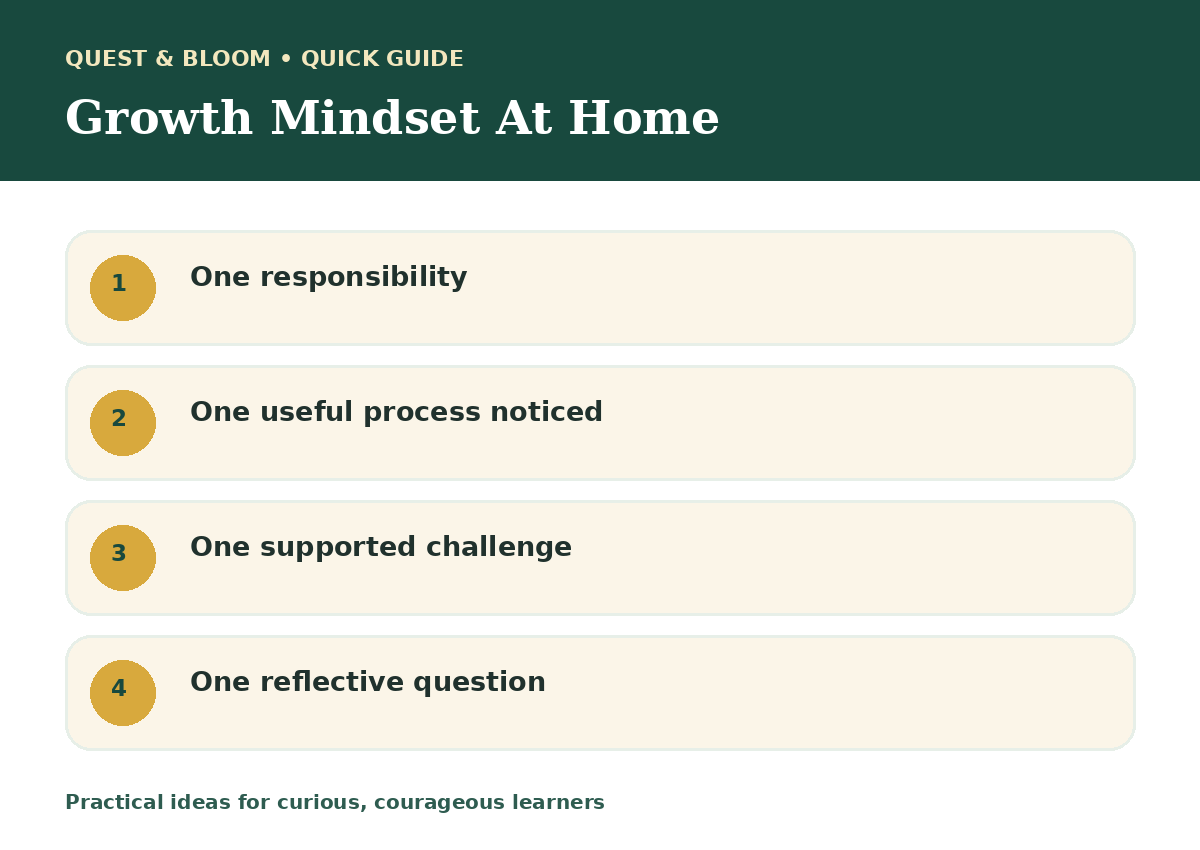
Let the child own one step of getting ready: fill the water bottle, check the bag, choose weather-appropriate clothing from two options or put breakfast items away.
Do not turn a rushed morning into an independence battle. Choose tasks that fit the time available.
After school: reconnect before reviewing performance
Food, movement and connection may be more useful than immediate questions about marks or behaviour. When the child is ready, ask one specific question about challenge, curiosity or strategy.
Try: “Was there anything today that took more than one try?”
Play: allow one problem to remain theirs
When a build falls or rules need negotiating, wait a little before stepping in. See whether the child can generate an idea.
If support is needed, offer a clue rather than taking control.
Homework or practice: notice process
Give one piece of specific feedback about a useful action: checking, slowing down, asking for help, changing strategy or returning after frustration.
Avoid turning every session into a praise marathon.
Mistakes: use a four-step response
Pause. Describe what happened. Find one clue. Choose a next step. This keeps mistakes practical and reduces shame.
If emotions are high, the next step can simply be “come back later”.
Bedtime: use stories and reflection lightly
A story character can create a natural conversation about challenge. Ask one open question only when it fits.
Occasionally finish the day with “What got a little easier today?” rather than a broad request for achievements.
Related Quest & Bloom guides
- Growth Mindset for Kids: 12 Practical Ways to Help Children Learn, Persist and Grow
- How to Build Resilience in Children Ages 4–8 Through Everyday Life
- 25 Growth Mindset Questions to Ask Kids After School, Play and Challenges
- A 7-Day Family Growth Mindset Challenge for Children Ages 4–8
Frequently asked questions
Do we need to talk about growth mindset every day?
No. The habits matter more than the terminology. Natural responses to real situations are enough.
What if mornings are too rushed?
Choose another part of the day. Independence and reflection are harder to practise when everyone is under time pressure.
How quickly will I see a difference?
Think in months rather than days. The aim is a gradual change in how children interpret challenge and recover from difficulty.
Sources and further reading
- American Psychological Association — principles for families and learning
- Stanford — Carol Dweck on process praise, challenge and perseverance
- Harvard Center on the Developing Child — Serve and Return
Keep exploring: Our personalised children’s adventures are designed around curiosity, courage, problem-solving and learning through the story itself.
This article is general educational information for parents and carers. Children develop at different rates; seek appropriate professional advice for individual developmental, educational or health concerns.