A fictional character can struggle, fail and recover without the child feeling personally corrected. That makes stories a natural way to talk about growth mindset.
The trick is restraint. If every page becomes a comprehension exercise or moral lesson, children may enjoy the book less.
If you are building these habits at home, explore our Growth Mindset hub and Quest & Bloom books for more practical ideas.
1. Choose stories with real obstacles
Look for characters who have to solve something, practise, ask for help, change plans or recover from disappointment.
The character does not need to deliver a speech about growth mindset. The behaviour is the lesson.
2. Ask one good question
Pause at a natural moment and ask something open: “What do you think they could try?” or “Why do you think that plan failed?”
Then continue reading. One useful conversation is better than constant interruption.
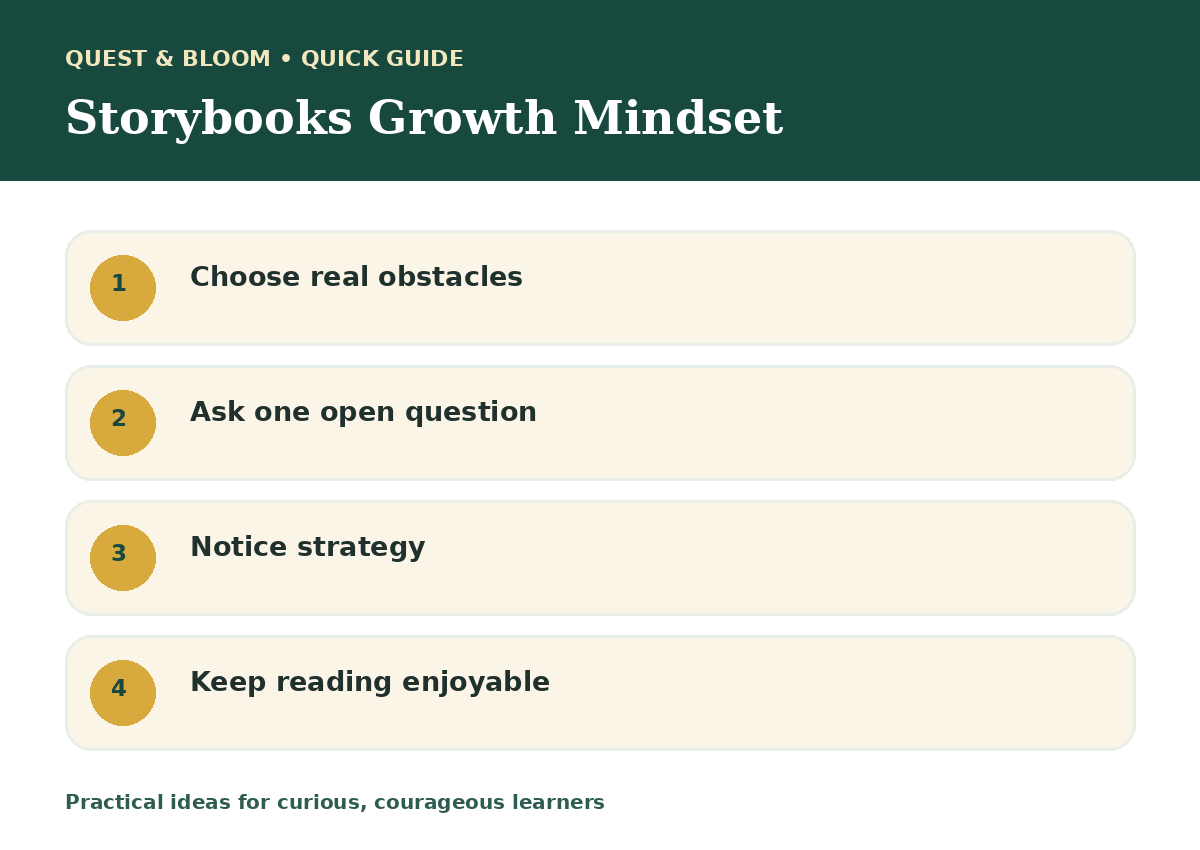
3. Talk about strategy, not virtue
Instead of “Was the character good because they never gave up?” ask what they actually did.
Did they gather information, ask someone, practise, change route, rest, apologise or try again?
4. Let the child disagree
A child may think the hero should have stopped, asked for help earlier or chosen a different plan. That disagreement is valuable because it requires reasoning.
Growth mindset is not one approved answer.
5. Connect only when it feels natural
If the story mirrors something your child has experienced, you can make a light connection: “That reminds me of when your bike felt impossible.”
Avoid using the book to smuggle in a lecture about yesterday’s behaviour.
Related Quest & Bloom guides
- Growth Mindset for Kids: 12 Practical Ways to Help Children Learn, Persist and Grow
- How to Raise Curious Kids: 10 Ways to Encourage Questions and Exploration
- 25 Growth Mindset Questions to Ask Kids After School, Play and Challenges
Frequently asked questions
What makes a good growth mindset story?
Look for meaningful challenge, problem-solving, mistakes, help-seeking and change rather than a character who succeeds effortlessly.
Should I explain the moral at the end?
Usually not. Ask what the child noticed and allow the story to keep some ambiguity.
Are personalised stories useful?
They can increase relevance and engagement when personalisation serves the story rather than becoming the whole point.
Sources and further reading
- American Psychological Association — principles for families and learning
- Stanford — Carol Dweck on process praise, challenge and perseverance
Keep exploring: Our personalised children’s adventures are designed around curiosity, courage, problem-solving and learning through the story itself.
This article is general educational information for parents and carers. Children develop at different rates; seek appropriate professional advice for individual developmental, educational or health concerns.